
Run outdoors four or five days a week, rain or shine, and you’re racking up cumulative sun exposure most people never actually stop to think about. Sunscreen alone isn’t the safety net you think it is once you’re sweating through it. The whole question — shirt or sunscreen — comes down to one thing: sunscreen sweats off, fabric doesn’t.
Why Sunscreen Alone Falls Short on Long Runs
Sunscreen’s protection degrades with sweat, typically starting to lose effectiveness within 40 to 80 minutes of heavy perspiration, well before most sunscreen labels suggest reapplying. On a run, reapplying isn’t practical — you can’t stop every hour to reapply sunscreen to your shoulders and the back of your neck. That gap between “when protection actually fades” and “when you can realistically reapply” is where a lot of runners end up more sunburned than they expected, despite having applied sunscreen honestly before heading out.
Why a Fabric Layer Doesn’t Have That Problem
A shirt physically blocks UV radiation from reaching skin underneath it, and that protection doesn’t degrade with sweat the way a topical product does — it works the same on mile 1 as it does on mile 20, regardless of how much you’ve sweated through it. It also covers skin more completely and consistently than sunscreen application usually does in practice, since there’s no risk of missing a spot or a strip going on too thin.
The tradeoff is coverage versus heat: more fabric means more UV protection but also more insulation to manage on a hot run, which ties directly back to the fabric-weight and fit points in our hot-weather dressing guide. A lightweight, moisture-wicking long-sleeve solves most of that tradeoff — covering the arms and shoulders (a common burn spot) without adding the heat load of a heavier layer.
A Practical Combination, Not an Either/Or
For most regular outdoor training, the two aren’t competing options — they cover different areas. A lightweight long-sleeve layer handles the arms, shoulders, and torso reliably for the entire run, while sunscreen still has a role on skin that isn’t covered: face, neck, and hands. Splitting the job this way means you’re not depending on sunscreen holding up across sweaty hours on the parts of your body most exposed and most prone to sunburn. A stick or spray sunscreen formula tends to be easier to reapply one-handed mid-run than a lotion, worth the small extra cost for the added convenience on longer efforts.
What UPF Numbers Actually Mean
UPF (Ultraviolet Protection Factor) measures how much UV radiation passes through fabric, similar in concept to SPF for sunscreen. A UPF 50 garment allows roughly 1/50th of UV radiation through, blocking about 98%. Density of the weave, fiber type, and even color all affect a fabric’s UPF rating — tighter weaves and darker colors generally block more UV, which is part of why plenty of ordinary athletic fabric provides real, if unrated, protection even without a UPF label attached. A specific UPF rating on a garment means it’s been tested and labeled; the absence of a rating doesn’t mean zero protection, just untested protection.
Don’t Forget Your Eyes
Sun protection conversations tend to focus entirely on skin, but UV exposure affects eyes too, and running outdoors regularly means cumulative exposure there as well. Sunglasses rated for UV400 protection block both UVA and UVB, and matter just as much on overcast days as clear ones, since UV radiation passes through cloud cover more than people expect.
Time of Day Changes the Math
UV intensity peaks roughly between 10am and 4pm, meaning a predawn or early-morning run carries meaningfully less UV exposure risk than a midday run of identical length. That doesn’t eliminate the need for protection on early runs — UV is still present at sunrise and climbs quickly — but it does mean the coverage decision can reasonably scale with what time you’re actually running, not just the season. A run that starts in the dark and finishes after sunrise deserves the same protection strategy as a fully daylight run, since the exposure window still opens partway through, often right as effort and heart rate are climbing toward the harder middle miles.
Reapplying Sunscreen Realistically
Sunscreen labels generally recommend reapplying every two hours, or immediately after heavy sweating — guidance that assumes you can actually stop and do it, which most runners can’t mid-run. The practical version of this advice is applying more generously than feels necessary before you start (most people under-apply relative to the amount tested to achieve the labeled SPF), choosing a sport or water-resistant formula specifically, and treating any run over 60-90 minutes as one where sweat has likely already reduced initial protection regardless of formula.
Cumulative Exposure Is the Real Risk
A single run’s UV exposure is rarely the concern — it’s the accumulation over years of regular outdoor training that meaningfully raises skin-damage risk, since running consistently multiple days a week means far more total sun hours than an occasional beach day. That accumulation is exactly why fixed, reliable coverage (clothing) matters more for someone training year-round than for someone in the sun a handful of times a year, where remembering sunscreen once in a while is a smaller factor in the overall total. Runners training toward a spring or fall race often log the bulk of their volume across the sunniest months of the year almost by accident, since race training cycles don’t line up with when sun exposure happens to peak — worth factoring in when deciding how seriously to take a coverage strategy versus treating it as optional.
Skin Tone Changes the Risk, Not Whether It Exists
Fair skin burns faster and with less cumulative exposure than darker skin, which means the practical urgency of covering up scales with individual skin tone. But UV damage to darker skin is real too, just slower to show as visible sunburn — it’s a difference in how quickly damage becomes obvious, not a difference in whether unprotected exposure causes damage at all. Nobody running regularly outdoors is fully exempt from needing some form of protection strategy, even if the timeline for “needs it” varies by individual. Family history and past sunburn history both factor in too, independent of current skin tone — worth weighing honestly rather than assuming your current tan or lack of visible burns means you’re in the clear long-term.
When a Long Sleeve Makes the Most Sense
- Predawn starts that run into full sun: a long-sleeve layer that’s already on doesn’t require stopping to apply anything once the sun comes up mid-run.
- Long runs and races: the longer you’re out, the more the sweat-degrades-sunscreen problem compounds — exactly where fixed fabric coverage pulls ahead.
- Cooler mornings that warm up: a lightweight long sleeve does double duty as light warmth at the start and sun coverage once temperatures climb, without needing to carry or discard anything.
- High-altitude or high-UV-index days: UV exposure increases with altitude regardless of temperature, which is easy to underestimate on a cool mountain morning.
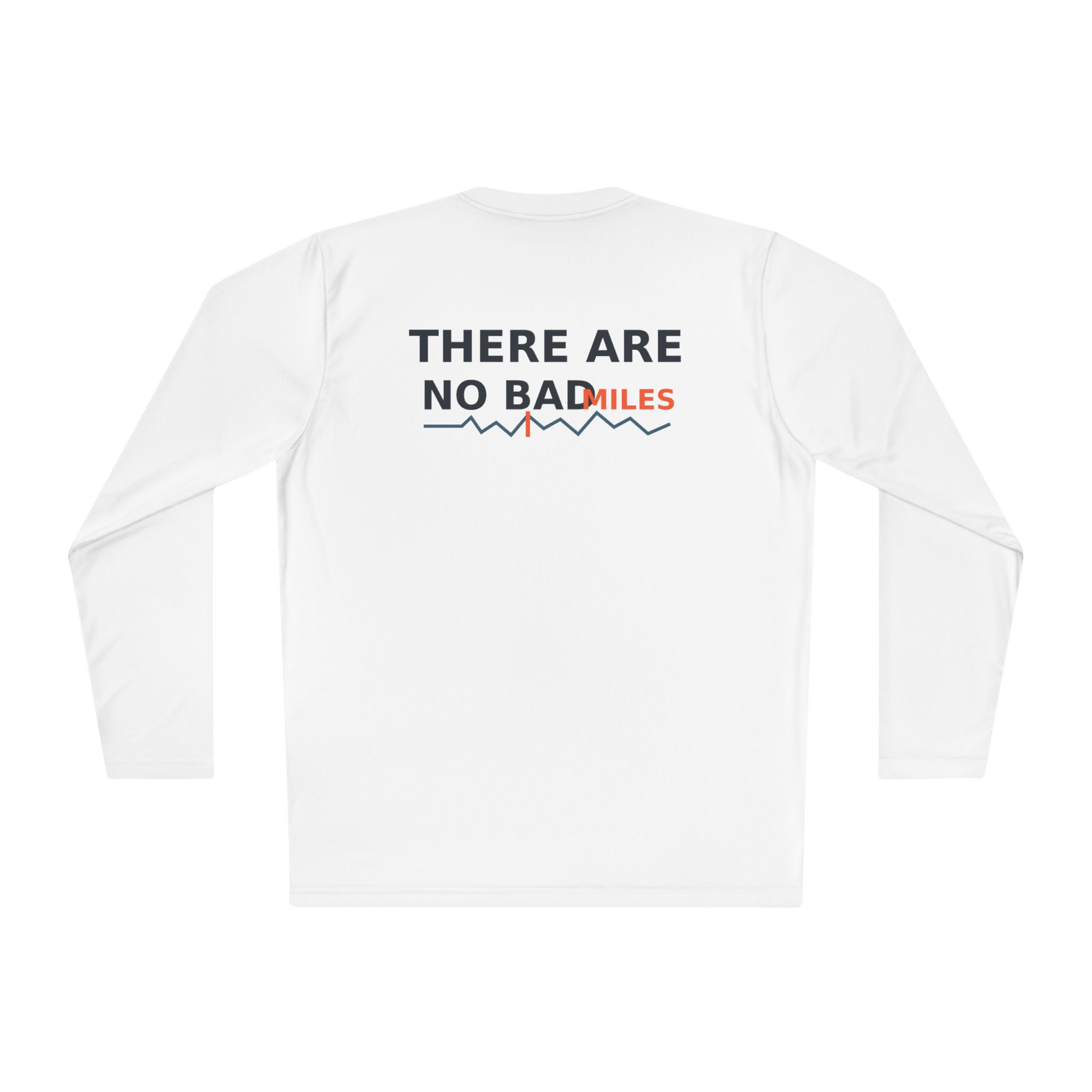
The Still Moving Long Sleeve is a lightweight 3.8 oz 100% moisture-wicking polyester layer built for exactly this — predawn starts and exposed miles where you want coverage without the heat penalty of a heavier fabric. Because it’s cut from the same lightweight fabric weight discussed in our hot-weather guide, it’s built to be worn through a run that starts cool and finishes hot without needing to strip a layer off partway through.
Medications That Change the Math
Some common medications — certain antibiotics, some acne treatments, a handful of blood pressure drugs — cause photosensitivity, meaning skin burns faster and more severely than usual under the same sun exposure. If you’re on something like that, coverage stops being a nice-to-have and starts being the actual priority over sunscreen, since a fixed fabric barrier doesn’t depend on how sensitized your skin currently is the way a topical product’s effectiveness does. Check with whoever prescribed it if you’re not sure your specific medication carries this risk — it’s a five-minute question and it’s worth asking before, not after, a bad burn shows up from a dose you didn’t think twice about taking every single morning.
Bottom Line
Sunscreen starts failing after 40-80 minutes of real sweat, no matter how good the formula. Fabric doesn’t care — mile 1 or mile 20, same coverage. Cover your arms with a sleeve, hit the face and neck with sunscreen, and stop worrying about it.
One Last Thing
None of this is complicated once it’s a habit. Long sleeve or sunscreen, pick one before you walk out the door, and don’t let “I’ll deal with it later” be the actual plan on a day you’re out there for two-plus hours.
FAQ
Is a long sleeve just too hot for summer?
Depends on the weight. A heavy one, yes. A light one — 3-4 oz/yd² — trades a little heat for a lot more coverage. Worth it most of the year.
Do I still need sunscreen if I’m wearing a long sleeve?
Yes — wherever the sleeve isn’t. Face, neck, ears, hands. The shirt doesn’t cover what it doesn’t cover.